
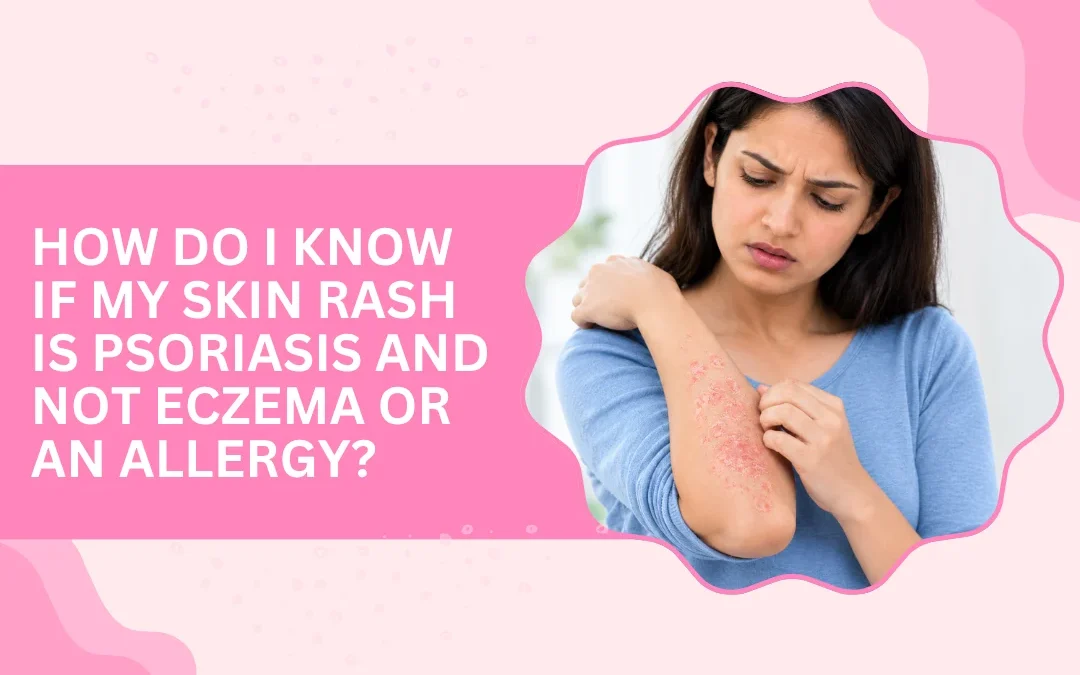
Telling these three apart comes down to observation rather than guesswork. Texture, location and how the skin actually feels each point toward a different answer, and psoriasis skin tends to stand out once you know what to look for.
According to Dr. Vandita Hede, Dermatologist in Hiranandani Estate, Thane, “Patients often compare their skin to photos they found online but pictures only get you halfway. Texture and location matter more and I’ve corrected plenty of self-diagnoses that weren’t obvious until I examined the skin myself.”
What Are the Key Signs of Psoriasis vs Eczema vs an Allergic Reaction?
Each condition tells a slightly different story on the skin. Once you know what to compare, the differences stop feeling random.
- Texture and Borders: Psoriasis forms thick raised patches with silvery scales and sharp edges while eczema looks softer and more spread out and allergic rashes show up as flat blotchy redness.
- Location on the Body: Psoriasis favors the elbows knees scalp and lower back. Eczema prefers the inner elbows and behind the knees. Allergic rashes tend to appear exactly where contact happened.
- How It Feels: Eczema itches intensely enough to disturb sleep. Psoriasis often burns or stings more than it itches. Allergic reactions itch hard and fast right after contact.
- Onset and Timing: Allergic rashes appear within hours of contact. Eczema usually starts in childhood. Psoriasis can begin at any age and often runs in families.
Comparing symptoms is step one. Confirming which condition you actually have needs a proper exam, not a photo comparison, and if psoriasis turns out to be the answer, our guide on Psoriasis Treatment Options covers what comes next.
When Should You See a Dermatologist Instead of Guessing?
Self-diagnosis works right up until it doesn’t. And with these three conditions, getting it wrong can cost weeks of the wrong treatment.
- Overlapping Symptoms: Some cases look nearly identical especially on the hands feet or scalp. Even experienced doctors sometimes need a closer look to be sure.
- Joint Involvement: Skin symptoms paired with joint pain or stiffness especially in the fingers or lower back point toward psoriasis rather than eczema.
- Treatment Mismatch Risk: Applying eczema cream to psoriasis or the reverse often means weeks of treatment that never actually works.
- Getting an Accurate Diagnosis: A dermatologist looks at texture location sensation and history together instead of relying on any single clue.
Skin reactions aren’t limited to psoriasis eczema or allergies either. Procedures can trigger something that looks similar too, and our piece on Q-Switch Laser covers how to tell a normal healing reaction from one that actually needs attention.
Why Choose Dr. Vandita Hede for an Accurate Skin Diagnosis?
Dr. Vandita Hede has spent over sixteen years examining exactly these overlapping skin conditions across Thane. She did her MD at Goa Medical College and is a member of IADVL IMA and CDSI. Her approach starts with a hands-on exam and not assumptions based on how a rash looks in a photo.
Misdiagnosis between these three conditions happens often and it’s a big reason treatments fail early. Getting it right the first time saves both time and frustration. Call +91 82916 99161 to book a consultation.
Not sure what’s causing your skin rash?
Frequently Asked Questions
Can psoriasis and eczema appear on the same person at once?
Yes, more often than people expect. A dermatologist can tell which patches belong to which condition.
Is an allergic skin reaction usually temporary?
Mostly once the trigger is removed. It clears up faster than psoriasis or eczema typically does.
Does scratching make psoriasis worse, like it does with eczema?
It can, yes. Scratching either condition risks skin injury which can trigger new patches to form.
Can a home patch test tell me which condition I have?
Not reliably. Texture location and sensation overlap enough that a proper exam is needed.
References
- National Institute of Arthritis and Musculoskeletal and Skin Diseases (NIAMS/NIH), Atopic Dermatitis (Eczema): https://www.niams.nih.gov/health-topics/atopic-dermatitis
- American Academy of Dermatology Association, What’s the Difference Between Eczema and Psoriasis: https://www.aad.org/public/diseases/eczema/childhood/child-have/difference-psoriasis
Disclaimer: This article is for educational purposes only and is not a substitute for professional medical advice. Please consult a qualified dermatologist for an accurate diagnosis before starting any treatment.