
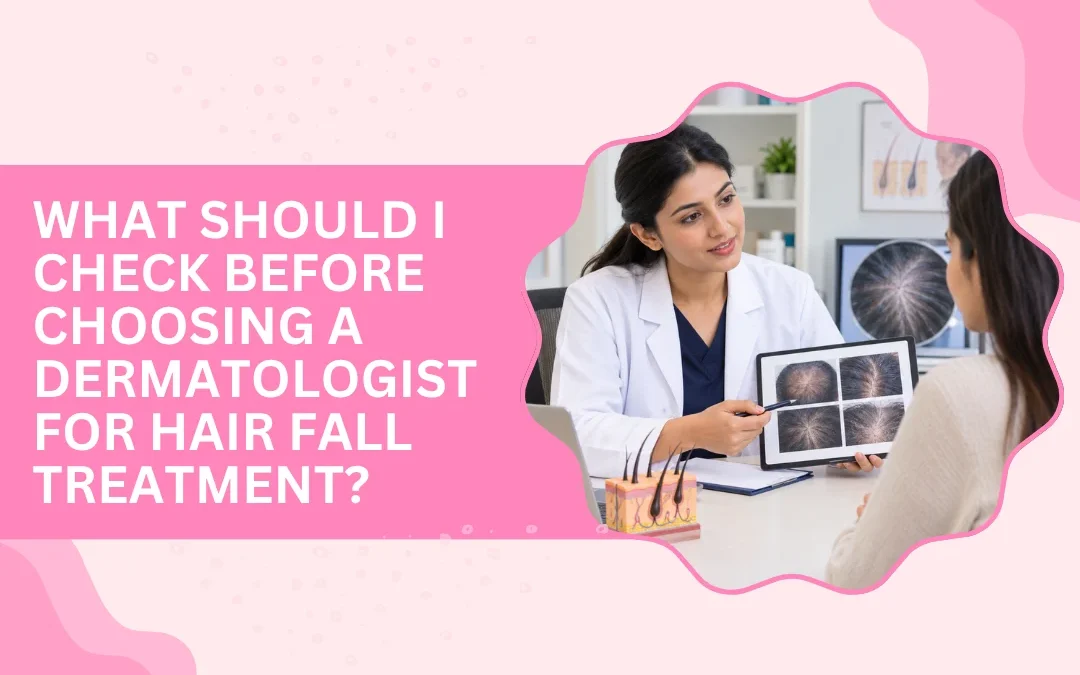
Choosing the right dermatologist for hair fall comes down to three checks. Real medical qualifications, genuine hair and scalp experience, and access to proper diagnostic tools like a trichoscope. Skip any one of these and treatment often starts on a guess instead of a diagnosis.
According to Dr. Vandita Hede, Dermatologist in Hiranandani Estate, Thane, “Ask what tools they actually use to examine your scalp. That one question tells you a lot. Anyone can look at hair loss and guess, but a proper diagnosis needs more than a glance, it needs magnification, a trained eye, and often a history that goes back months before the shedding even started.”
What Should You Verify Before Choosing a Dermatologist for Hair Fall?
A quick checklist saves you from a bad first consultation. Here’s what actually matters when you’re comparing the best dermatologist for hair near you.
Medical Qualifications: Confirm an MBBS followed by an MD in Dermatology, since that’s what separates a licensed dermatologist from a salon-based hair consultant.
Hair-Specific Experience: Ask how many hair fall cases they’ve handled, because general skin expertise doesn’t automatically translate to scalp and follicle disorders.
Diagnostic Equipment: Look for a clinic that uses trichoscopy or dermoscopy, since visual guesswork rarely catches early-stage conditions like androgenetic alopecia.
Treatment Range: A good dermatologist offers more than one option, from topical medication to GFC or PRP, rather than pushing a single fixed protocol on everyone.
Knowing what to check matters, but so does knowing what’s actually on offer. That’s exactly what these hair fall treatment options cover in detail.
What Red Flags Suggest You Should Look Elsewhere?
Some warning signs show up before you’ve even started treatment. And they’re worth taking seriously.
One-Size-Fits-All Promises: Be cautious of any clinic guaranteeing the same result for every patient, since hair fall causes vary too much for a universal fix.
No Diagnostic Workup: If a treatment plan gets handed to you without an actual scalp examination, that’s a sign the diagnosis was skipped entirely.
Unclear Credentials: A dermatologist should be able to state their qualifications plainly, not deflect the question or point to vague “years of experience.”
No Follow-Up Plan: Hair fall treatment needs monitoring over months, so a one-time consultation with no review plan rarely works long term.
If GFC or PRP therapy comes up as an option during your consultation, our GFC hair treatment page explains how the procedure actually works.
Why Choose Dr. Vandita Hede for Hair Fall Treatment?
Dr. Vandita Hede has treated hair and scalp conditions across Thane for over sixteen years. She did her MD at Goa Medical College and is a member of IADVL, IMA, and CDSI. Every consultation starts with a proper scalp examination, not a template treatment handed out before the cause is even confirmed.
Hair fall rarely has one single cause, so she builds each plan around what the examination actually shows. Call +91 82916 99161 to book a consultation.
Not sure what to ask before booking?
Frequently Asked Questions
Is a dermatologist better than a trichologist for hair fall?
Yes, for medical causes. A dermatologist can diagnose and prescribe, while a trichologist mostly offers general advice.
What equipment should a good hair dermatologist use?
A trichoscope or dermoscope at minimum. It lets the doctor examine follicles closely instead of guessing visually.
How many sessions does hair fall treatment usually take?
It varies by cause and severity. Most plans need a few months before real improvement becomes visible.
Should I be worried if my dermatologist orders blood tests?
No, that’s normal. Thyroid and hormonal issues often contribute to hair fall and are worth ruling out.
References
- American Academy of Dermatology Association, How to Select a Dermatologist: https://www.aad.org/public/fad/how-to-select-a-derm
- American Academy of Dermatology Association, Hair Loss Resource Center: https://www.aad.org/public/diseases/hair-loss
Disclaimer: This article is for educational purposes only and is not a substitute for professional medical advice. Please consult a qualified dermatologist to evaluate the cause of your hair fall.