
Photo Facial Treatment in Hiranandani Estate, Thane

Sun spots, redness, uneven tone — creams and serums can only do so much for these. What’s actually happening is deeper than the surface: years of sun exposure, pollution, and daily stress leave behind pigmentation and tiny broken blood vessels sitting beneath the skin. The result is a complexion that looks patchy and tired, no matter how good your skincare routine is.
A photo facial takes a different route. It uses targeted light energy, known as IPL (Intense Pulsed Light), to reach the pigment and blood vessels under the surface and break them down, letting the body clear them out naturally. When it’s done properly, skin looks brighter and more even-toned, with little to no visible downtime.
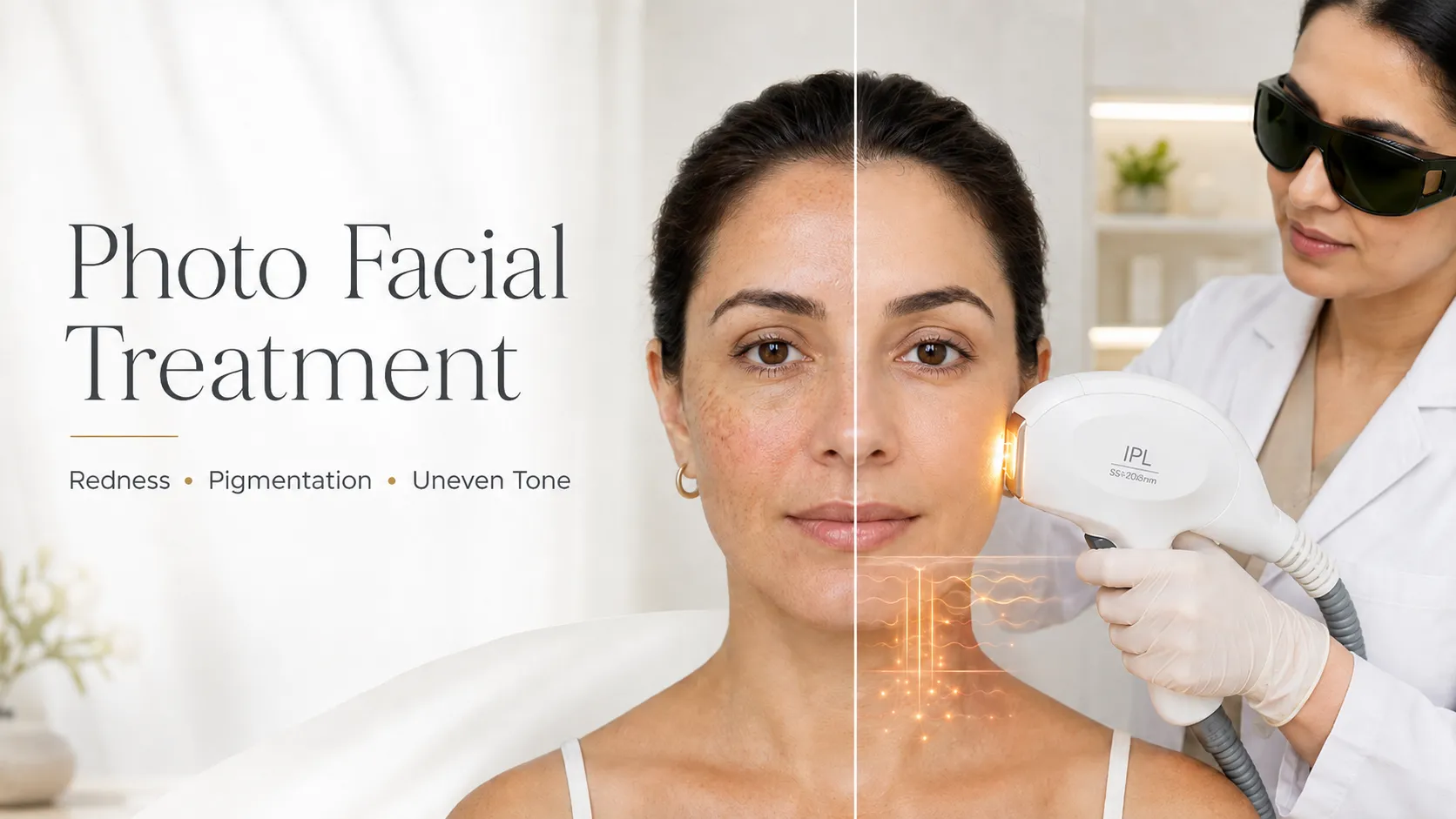
At-home devices and salon-grade facials often fall short here — pigmentation and redness barely budge because getting real results depends on the right wavelength, the right intensity, and an accurate read of the skin first. This is exactly why a dermatologist’s involvement makes such a difference.
At The Skin Clinic, Dr. Vandita Hede, a dermatologist based in Hiranandani Estate, Thane, approaches every session with careful calibration and safety as the starting point, not an afterthought.
“Photo facials aren’t a one-size-fits-all treatment. The settings have to be adjusted for each patient’s skin type and concern, otherwise you either don’t see results or you risk irritation. That’s where experience makes the difference.” — Dr. Vandita Hede
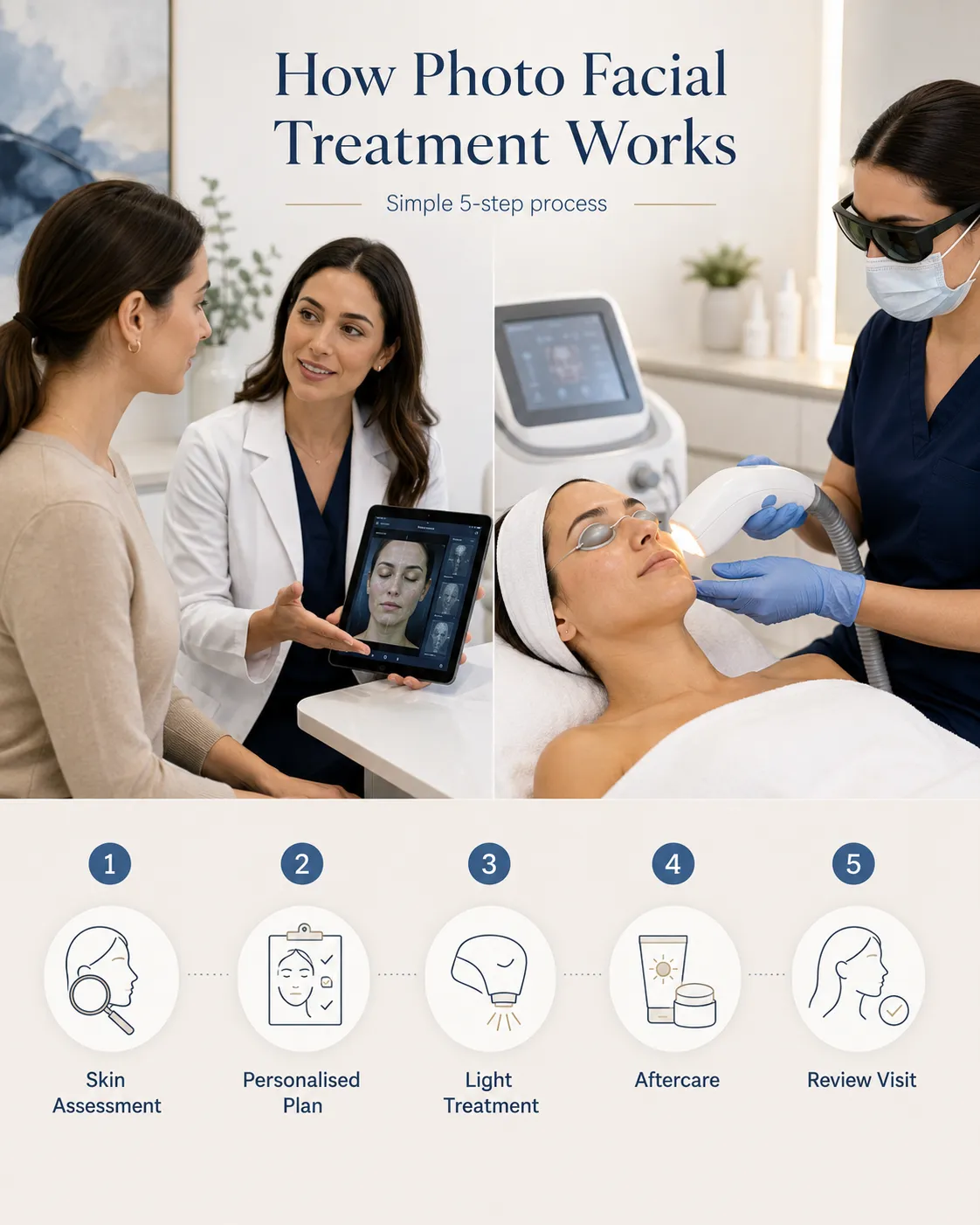
How Photo Facial Treatment Works at The Skin Clinic
1. Skin Assessment
Dr. Hede examines your skin tone, pigmentation pattern, and vascular concerns to determine the right treatment settings.
2. Personalised Treatment Plan
Wavelength, intensity, and number of sessions are chosen based on your skin type and specific concern.
3. Light-Based Treatment
Pulses of light are passed over the treatment area, targeting pigment and blood vessels. The session usually takes 20-30 minutes.
4. Aftercare Guidance
Simple do’s and don’ts for the first few days, particularly around sun protection, to support proper healing.
5. Review Visit
A follow-up session, typically after 3-4 weeks, tracks progress since most protocols involve a series of sittings.
Advanced Photo Facial Treatments Offered by Dr. Vandita Hede
Pigmentation Correction
Targets sun spots, freckles, and uneven pigmentation for a more even skin tone.
Redness and Rosacea Treatment -
Reduces visible redness and broken capillaries caused by rosacea or sensitive skin.
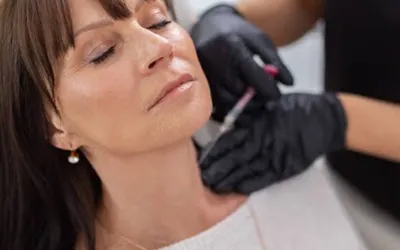
Sun Damage Reversal
Addresses photoageing signs like brown spots and blotchy texture from years of sun exposure.
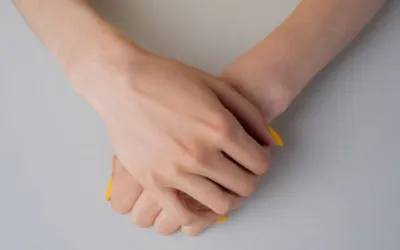
Pore Refinement
Improves the appearance of enlarged pores alongside overall skin clarity.
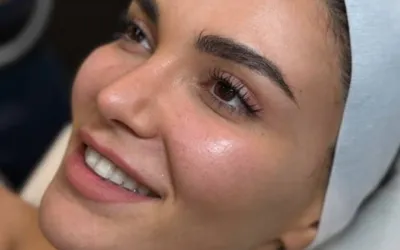
Glow Protocol (Combination Sessions)
A series of sittings layered for a cumulative, radiant, even-toned finish.
Where Is Photo Facial Treatment Commonly Used?
Photo facials are used on areas that show pigmentation, redness, or sun damage, including:
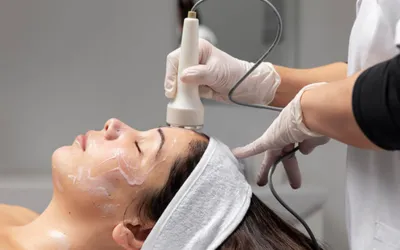
Full face
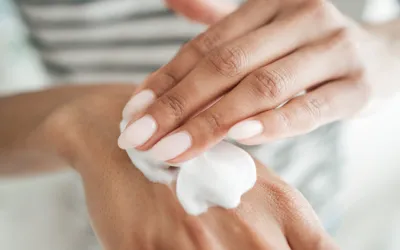
Neck

Décolletage (chest area)
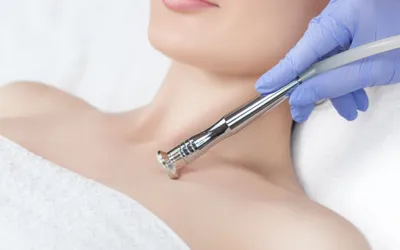
Hands
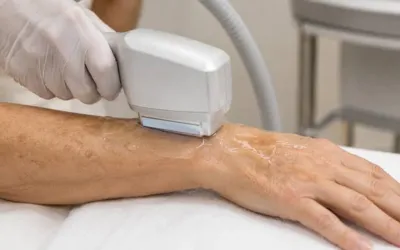
Forearms
Each area is assessed separately for pigment depth and skin sensitivity during your consultation.
Who Is an Ideal Candidate for Photo Facial Treatment?
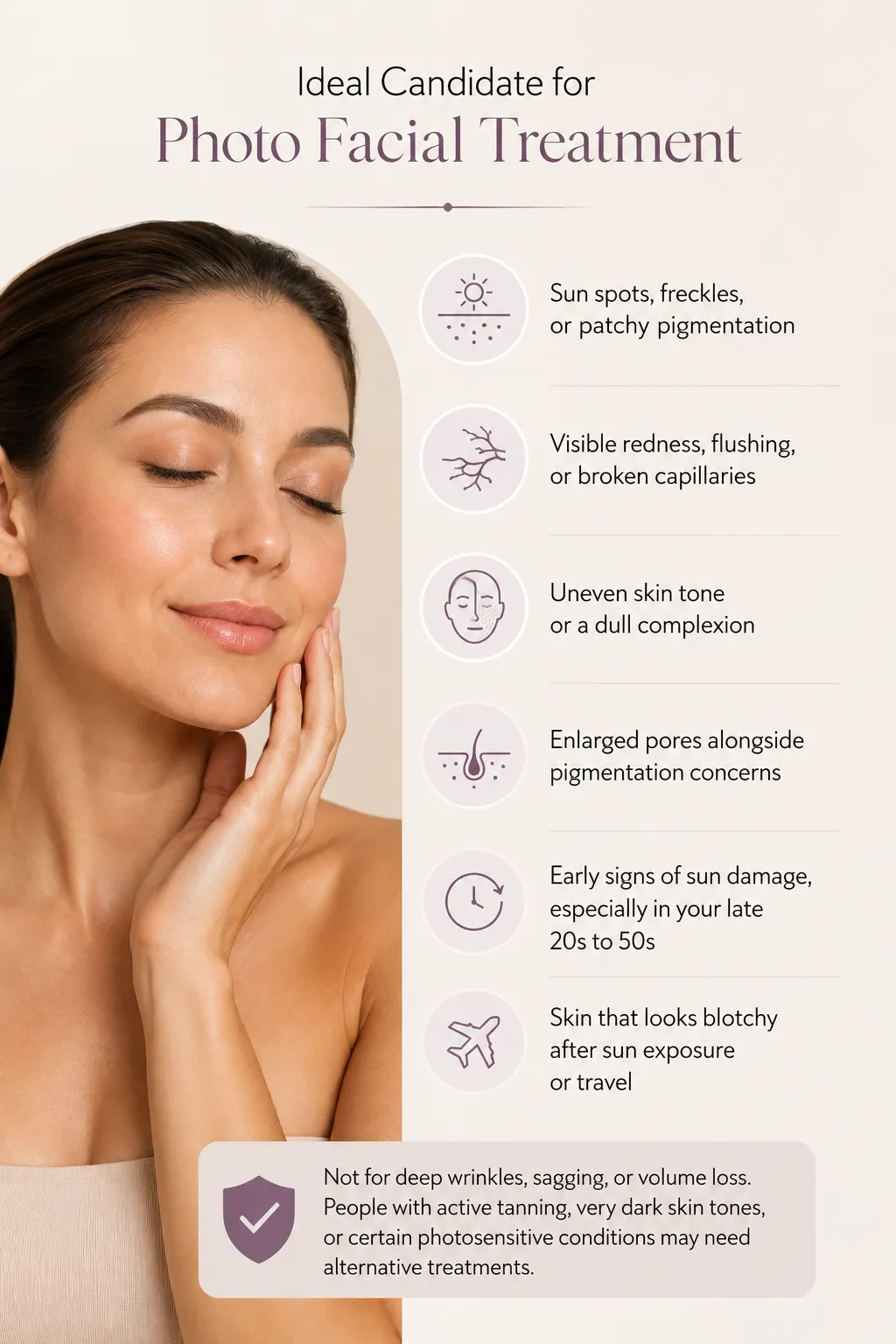
Photo facials work best for people looking to improve skin tone and clarity rather than treat deep wrinkles or volume loss. You may be a good candidate if you have:
Sun spots, freckles, or patchy pigmentation
Visible redness, flushing, or broken capillaries
Uneven skin tone or a dull complexion
Enlarged pores alongside pigmentation concerns
Early signs of sun damage, especially in your late 20s to 50s
Skin that looks blotchy after sun exposure or travel
Photo facial treatment is not designed to add volume, lift sagging skin, or treat deep static wrinkles — those concerns are better addressed with other treatments, which Dr. Hede will advise on during your consultation if needed. People with active tanning, very dark skin tones, or certain photosensitive conditions are usually advised to explore alternatives, based on assessment.
Cost of Photo Facial Treatment in Hiranandani Estate, Thane
Cost of photo facial treatment in Hiranandani Estate, Thane will depend on the treated area, the number of sessions required, and the specific concern being addressed. For example, a single-area treatment like the face alone will cost less than a combination protocol covering face, neck, and hands together.
Cost could also vary depending on the depth of pigmentation, how many sessions are needed to reach your goal, or if photo facial is combined with other treatments. Only US FDA-approved IPL technology is used at The Skin Clinic to ensure safety and consistent results.
After Dr. Hede examines your skin at the consultation, a detailed plan together with accurate cost can be drawn up.
Why Choose Dr. Vandita Hede for Photo Facial Treatment?
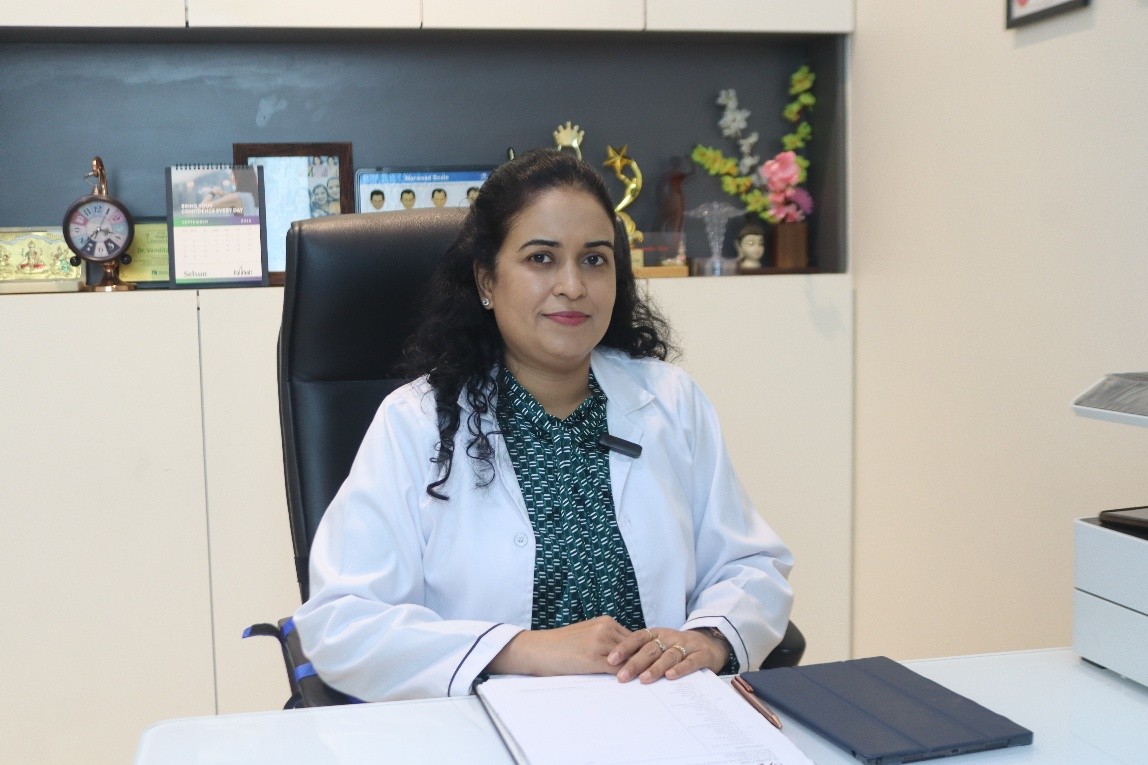
17+ Years of Expertise
Dr. Vandita Hede has extensive experience in cosmetic and medical dermatology, backed by a strong clinical understanding of pigmentation and skin behaviour.
Precision-Calibrated Treatment
Every session is calibrated to your skin type and concern, minimising risk while maximising results.
Personalised Treatment Protocols
No fixed packages. Session count and settings are tailored to your skin’s specific needs and goals.
Trusted, Advanced Technology
Only US FDA-approved IPL devices are used, ensuring consistent, predictable, and safe outcomes.
Safe, Clinical Environment
All procedures are performed in a sterile, dermatologist-supervised setting, following strict clinical protocols.
Transparent, Honest Guidance
Clear communication on realistic timelines, expected results, and pricing, with no overpromising.
Frequently Asked Questions
1. How many sessions of photo facial treatment do I need?
A photo facial treatment program usually consists of 3-6 sessions spaced 3-4 weeks apart with follow-up maintenance sessions as recommended by your dermatologist to maintain the outcome.
2. Is photo facial treatment painful?
Mostly, there is only minimal discomfort and it is often described as a quick snapping sensation. For comfort, you can be given a cooling gel or a numbing cream before the treatment is done.
3. When can I expect to see the effects of a photo facial treatment?
Your pigmented spots may darken slightly after the treatment before they gradually fade. The overall improvement in skin tone and texture is a gradual process that becomes more noticeable over the complete course of recommended sessions.
4. How does a photo facial differ from a chemical peel?
Chemical peels are a method to remove the top layerof the skin, whereas photo facial treatment delivers light energy to the deeper layer to address the pigments and blood vessels without actually removing any surface skin layers.
5. Do you need time off after the photo facial treatment?
Just a little. Some slight redness or spots that appear darker may be noticed for the first few days which will resolve.
6. Photo facial is safe?
Absolutely.Photo facial treatment is an extensively used, safe procedure when a dermatologist has been trained to do it using medical-grade IPL technology that has been approved.