
Pigmentation Treatment in Hiranandani Estate, Thane

Pigmentation is any alteration of the skin’s natural color, typically dark patches, spots or uneven skin tone. It affects the face, neck, hands, underarms and other parts of the body and is one of the most frequent skin complaints of Indian skin tones. Dr. Vandita Hede specializes in Pigmentation Treatment at The Skin Clinic and understands individual pigmentations, their causes and devises a treatment plan as per the type of pigmentation.
Dr. Vandita Hede, a dermatologist in Hiranandani Estate, Thane follows the method of assessment of the pigmentation clinically before suggesting any treatment. The variety of pigmentation is caused by various factors and will vary in response to treatment, so the plan varies according to the skin type, depth and pattern of pigmentation, sun exposure, lifestyle and medical history.

The Skin Clinic is a skin clinic with Dr. Vandita Hede providing a variety of medical and aesthetic dermatology treatment in Thane. She is a consultant dermatologist with experience in clinical and cosmetic dermatology, and treats children and adults for skin and hair related issues.
Not certain what sort of pigmentation do you have? Let’s learn what this condition is and its typical symptoms.
Not certain what sort of pigmentation do you have? Let’s learn what this condition is and its typical symptoms.
Common Signs of Pigmentation
Melanocytes, skin cells that make melanin, determine skin colour. If the melanin production gets more or uneven, darker spots or patches than the surrounding skin may appear. Pigmentation is typically harmless, but it may have a lasting influence and cause a confidence issue. Common signs include:
- A brownish, grey-brown or dark spot on the cheeks, forehead, upper lip or jawline.
- Flat dark spots on sun exposed areas of skin, such as face, hands and arms
- Darks spots that do not fade away, likeafter acne, rashes, insect bites or minor injuries.
- The darkening of color on the skin on the neck, under arms, elbows, knees or knuckles.
- Dark rings around the eyes or darkness around the eyes.
- Differences in skin tone or a tanned complexion which doesn’t tone down quickly
Is all pigmentation the same?Let’s examine the various types and their appearance.
Types of Pigmentation Evaluated at The Skin Clinic
Because different conditions can look alike, a proper clinical diagnosis is important before starting any treatment.
What makes pigmentation appear or worsen? Let’s understand the common causes and triggers.
Common Causes and Triggers of Pigmentation
The causes of the development of pigmentation are typically a mix of genetic susceptibility, environmental factors and hormonal changes. Factors which are common causes of the issue are:

Exposure to ultraviolet radiation (UV) and in some individuals exposure to visible light
Acne or eczema, allergic reactions or skin injuries may cause inflammation.
Some pharmaceuticals and cosmetic products which irritate or sensitise the skin.
Irresponsible use of skin-lightening products
Hormonal changes – including during pregnancy or when taking some hormonal treatments
Stress and lack of sleep, which can exacerbate certain types of pigmentation.
Some people require health or nutritional issues to be evaluated as they are at risk of developing them,
Family history and innately pigmented skin.
Repeated rubbing, scratching or tearing of the skin
Exposure to the sun without adequate precautions, for a prolonged period of time, during the sunny summer months in Thane.
Long-term treatment of pigmentation involves identifying the cause and avoiding the triggers.
Concerned about dark patches or uneven skin tone? Connect with the clinic to understand the type of pigmentation and the suitable options.
How is pigmentation diagnosed? Let’s understand what to expect at your consultation.
How Dr. Vandita Hede Evaluates Pigmentation
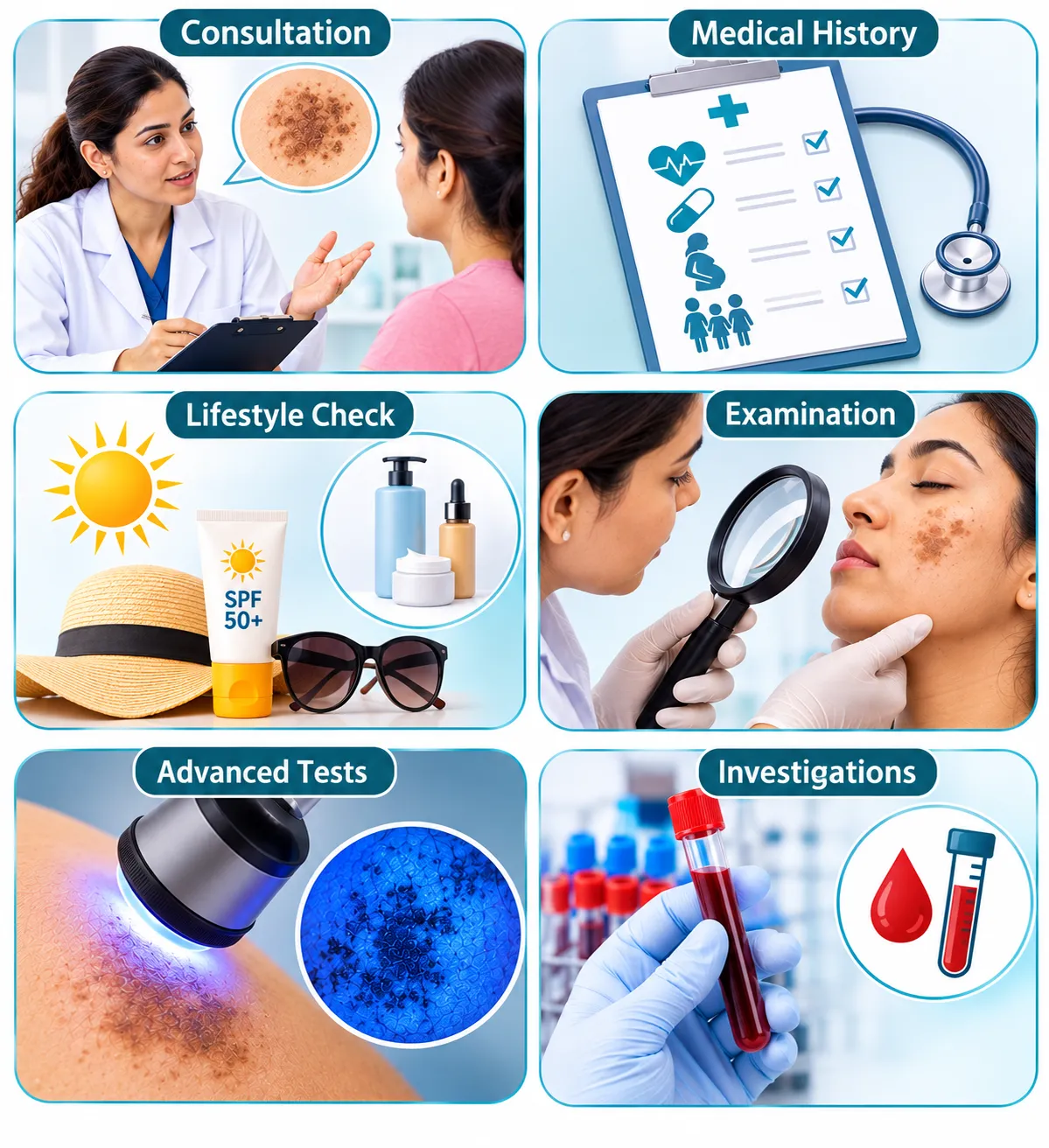
Pigmentation is usually evaluated through a detailed clinical examination. During your consultation, Dr. Vandita Hede may:
This helps ensure the right diagnosis and avoids unnecessary or ineffective treatments.
What does pigmentation treatment involve? Let’s explore the approaches used.
Pigmentation Treatment Options in Hiranandani Estate, Thane
Treatment is planned based on the type of pigmentation, the depth of the pigmentation, skin type and the areas in which the pigmentation is present. It may be a combination of, or all, the following:
Sun protection
this is the starting point of any pigmentation plan and involves taking precautions against the sun every day, including wearing a broad-spectrum sunscreen.
Topical medications
Prescription topical creams and serums like depigmenting agents, retinoids, azelaic acid, vitamin C or other appropriate active ingredients, applied under supervision
Oral medications
medicines given after evaluating suitability and safety for selected patients.
Chemical peels
Superficial peels which exfoliate the skin, to improve the look of some pigmented conditions.
Laser treatments
Appropriate lasers for specific skin pigmentations depending on the skin type and condition.
Other treatments
In selected cases as part of the overall treatment plan, such as microneedling
Skin care tips
Easiest and lightest skin care regimen and recommendations for what to avoid.
Tackling the cause of the dark marks: Acne, eczema or other conditions that cause dark marks should be treated.
Skin-lightening creams, particularly those with steroids and/or mercury, can have undesirable effects on the skin and increase pigmentation when used without supervision. They should only be treated by a dermatologist and closely monitored.
Is it pigmentation or something else? Let’s compare it with similar skin conditions.
Pigmentation vs Other Similar Skin Conditions
Using the wrong cream, particularly skin-lightening products without medical advice, can make the problem worse. This is why proper diagnosis matters.
Can pigmentation be managed in the long run? Let’s understand what to expect from treatment.
Pigmentation Treatment Results
Some types of pigmentation such as acne spots/after spots, tanning etc may improve with time if treated properly. Others, like melasma, are chronic and can be managed, but can come back, especially if exposed to the sun or due to hormonal changes.
It will take time to see progress and is most likely weeks or months rather than days.
It’s important to be consistent with sun protection to preserve results.
Recurrence is possible and follow-up and maintenance therapy is necessary.
Some patients may need more than one treatment to achieve better control.
The pigmentation levels are slower to react if they are on the bottom level compared to top level.
Regular follow-up allows the plan to be reviewed and adjusted if needed.
The results will vary from patient to patient.
Do you need to see a dermatologist? Let’s understand when professional care becomes important.
When Should You See a Dermatologist for Pigmentation?
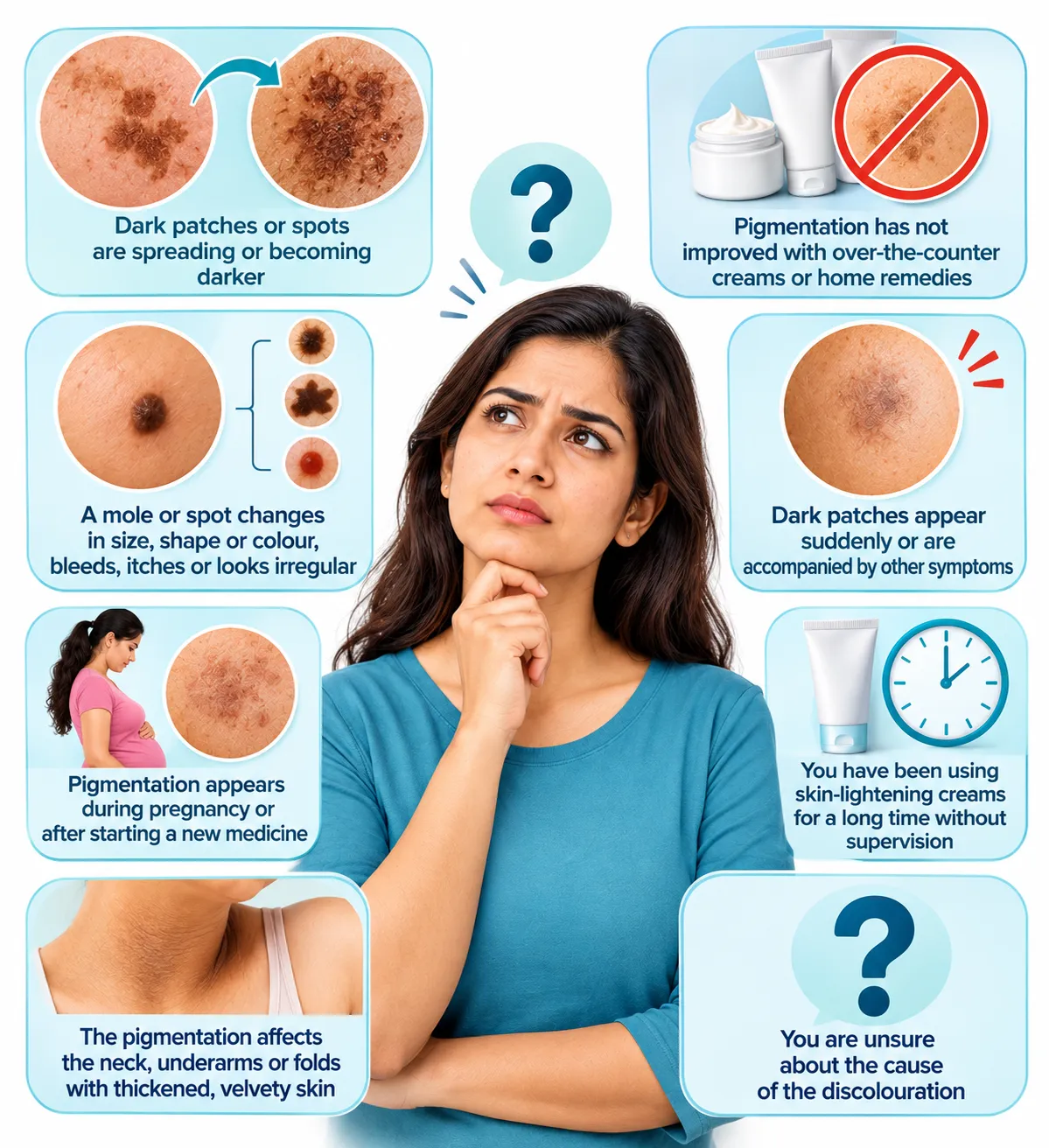
Consider consulting a dermatologist if:
Want to know more about the dermatologist you will consult? Here is what a consultation at The Skin Clinic involves.
Dr. Vandita Hede's Approach to Hair Loss Care in Hiranandani Estate, Thane
Dr. Vandita Hede’s strategy for pigmentation treatment is to first determine the pigmentation type and cause and then target the treatment based on the patient. Her approach includes:

Diagnosing before treatment: The diagnosis is made by history and clinical examination and investigations are recommended as necessary.
Individualised planning: The plan takes into consideration the age, skin type, area involved, severity of condition and lifestyle.
Cause and trigger focus on care: Treatment and identification of triggers: sun, hormones, inflammation, skin care products.
Sun protection and skincare advice: The plan includes some advice on sun protection and a simple, gentle skin care routine.
Informed consent and counselling: Options for treatment, timeframe of treatment, limitations and potential side effects discussed – so the patient can make informed decisions.
Follow-up and review: Progress is monitored on follow up visits, and plan adjusted if necessary.
Frequently Asked Questions
1. What causes pigmentation?
Pigmentation occurs when melanin is produced more or is produced irregularly. Factors are exposure to the sun, hormonal changes, acne or rashes, genetics, some medications and skin irritation.
2. Will pigmentation be completely removed?
This will vary according to the type of pigmentation. Some can go away with treatment such as tanning, some remain such as melasma. When you visit a dermatologist, they can inform you what to expect after examining you
3.What is the difference between the two: sun tan and melasma?
Melasma is typically brown or grey-brown in color and symmetrical on the face, and is associated with hormones and sun exposure. A tan indicates a general darkening of skin that is exposed to the sun, and it is likely to improve if there is less exposure to the sun. They can be distinguished by a skin doctor.
4. Is there a suitable use for skin lightening creams for pigmentation?
When applied under the supervision of a health care provider, a few of the ingredients recommended in a health care provider’s formulation, and used appropriately, are suitable for treatment of pigmentation. Many over-the-counter lightening products contain steroids or other chemicals that can make the skin thinner and cause rashes and/or increase pigmentation in the long run.
5. Do you need to apply sunscreen to the pigmentation treatment?
Yes. Pigmentation can be intensified by sun exposure, and may come back. Using a wide spectrum sunscreen every day is an essential aspect of treatment, even if you are in the house next to windows or on cloudy days.
6. Will there be a chance of pigmentation coming back after treatment?
Yes, in some cases. In particular, melasma can return if you don’t follow the given routine, when there’s a hormonal change or if you’re exposed to the sun. Can be managed with regular follow up and sun protection.
7. When is it a cause for concern if I have a dark spot?
When a spot or mole begins to change in size, shape, or color, or has irregular edges, or is bleeding, itching or not healing, consult a dermatologist. There is a need to appraise the changes correctly.
Disclaimer: The information shared in this content is for educational purposes and not for promotional use.