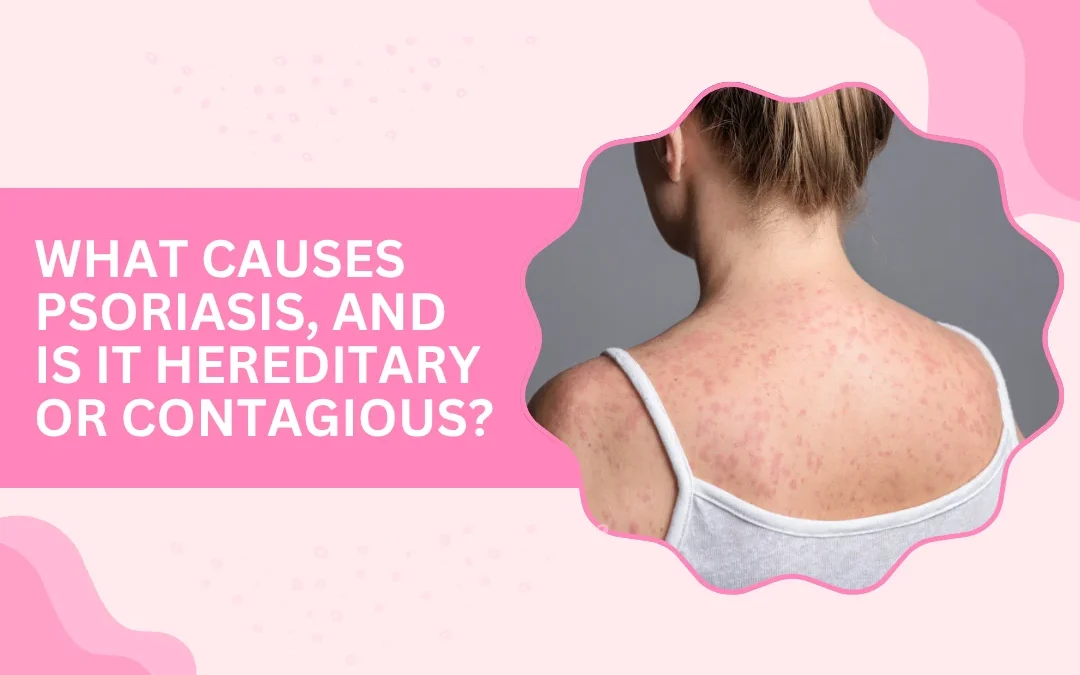
Psoriasis doesn’t start on the skin. It starts in the immune system, which for reasons scientists still don’t fully understand, decides to speed up skin cell production. Cells that should take weeks to mature show up in days instead, and that pileup is what you actually see on the surface. Genetics matter a lot here. So psoriasis tends to run in families. What it does not do, under any circumstance, is spread from one person to another.
According to Dr. Vandita Hede, Dermatologist in Hiranandani Estate, Thane, “Half my first consultations start the same way. Patients want to know if they brought this on themselves, or worse, if they gave it to their kids by hugging them. Neither. This is your immune system, not a virus.”
What Actually Triggers Psoriasis Flare-Ups?
There’s rarely one clean answer here. Most cases start as a genetic tendency that stays quiet until something sets it off.
Immune System Overactivity: Certain immune cells fire off signals that push skin cells to regenerate way too fast. The result piles up on the surface as plaques.
Genetic Predisposition: Scientists have linked several gene variants to psoriasis risk, and a good chunk of them sit in immune-related pathways. Carrying one doesn’t mean you’ll ever develop the condition. It just tilts the odds.
Environmental Triggers: A skin injury, a bout of strep throat, certain blood pressure medications, even a nasty sunburn. Any of these can flip the switch in someone already predisposed. Winter tends to bring a spike too. Dry air and low humidity seem to aggravate flares, even in patients who’ve been stable for months, which honestly surprises a lot of people.
Stress and Lifestyle Factors: Chronic stress, smoking, heavy drinking, none of these cause psoriasis on their own. But they’re reliable at making an existing flare worse and dragging it out longer.
Working out which trigger applies to which patient isn’t guesswork. It’s what actually shapes the psoriasis treatment options that follow.
Is Psoriasis Hereditary, and Can It Be Passed to Others?
Two separate questions get asked as one, almost every single time.
A Genetic Component: Family history raises the odds meaningfully. Several genes tied to psoriasis sit right in the middle of how the immune system operates day to day.
Not Contagious: There’s no bacteria involved. No virus, no fungus, nothing to catch. Touch a psoriasis patch, shake a hand, share a meal, the risk is zero.
Inheritance Isn’t Destiny: A parent with psoriasis doesn’t guarantee a child will get it. Genetics load the dice. They don’t decide the roll.
Onset Timing Varies: Some people see their first flare as a kid. Others don’t get one until their fifties, family history or not.
We mentioned earlier that skin injury can set off a flare, and that includes trauma from procedures like tattooing, not just cuts or sunburn. If you’re weighing pigmentation or tattoo removal, our Q-Switched Laser Treatment page covers how the procedure works and what to expect, especially if your skin tends to react.
Why Choose Dr. Vandita Hede for Psoriasis Care?
Dr. Vandita Hede has spent over sixteen years treating skin conditions across Thane. She trained at Goa Medical College for her MD and is a member of IADVL, IMA, and CDSI. Before she writes a treatment plan, she goes through a patient’s genetic history, flare pattern, and daily habits first. No two plans look identical, because no two patients trigger the same way.
Psoriasis rarely stays confined to the skin alone. It can reach the joints, the nails, and it wears on mental health too, so her approach doesn’t stop at what’s visible. Call +91 82916 99161 to book a consultation.
Not sure whether what you’re seeing is psoriasis, eczema, or just dry skin acting up?
Frequently Asked Questions
Can psoriasis be completely cured?
Not permanently, no. But that doesn’t mean it’s unmanageable, the right treatment plan keeps flares under control and skin clear for long stretches at a time.
Is psoriasis contagious through physical contact?
This is probably the biggest myth around psoriasis. It comes from an overactive immune response rather than any bacteria or virus, so shaking hands, hugging, sharing a towel, none of it carries any risk.
Can stress trigger a psoriasis flare-up?
Often, yes. Patients frequently notice a flare lining up with a stressful stretch at work or home. Keeping stress in check won’t cure psoriasis, but it does tend to cut down how often flares show up.
Does psoriasis affect only the skin?
Not necessarily. Nails, scalp, and joints can be involved too, which is why a proper check with a dermatologist matters more than just treating whatever patch is visible.
References
- National Institute of Arthritis and Musculoskeletal and Skin Diseases (NIAMS/NIH), Psoriasis Causes and Risk Factors: https://www.niams.nih.gov/health-topics/psoriasis
- National Library of Medicine (PMC), Psoriasis and Genetics: https://pmc.ncbi.nlm.nih.gov/articles/PMC9128944/
Disclaimer: This article is for educational purposes only and is not a substitute for professional medical advice. Please consult a qualified dermatologist for an accurate diagnosis before starting any treatment.