

Eczema Treatment in Hiranandani Estate, Thane

Eczema is a common long-term skin condition that causes dry, itchy, red and inflamed skin. It can flare up and settle repeatedly, affecting comfort, sleep and confidence. At The Skin Clinic, Dr. Vandita Hede offers Eczema Treatment with a focus on identifying the type of eczema, calming active flare-ups and helping patients manage the condition over the long term.
Dr. Vandita Hede, a distinguished dermatologist in Hiranandani Estate, Thane, believes eczema care works best when it goes beyond temporary itch relief. Her approach is to understand what is triggering the flare-ups, repair the skin barrier, and build a treatment and skincare routine that suits the patient’s age, skin type, lifestyle and the severity of the condition.
The Skin Clinic is a state-of-the-art skin clinic based in Thane, consisting of a comprehensive range of treatments in the area of medical and aesthetic dermatology under the aegis of Dr. Vandita Hede. A consultant dermatologist with many years of experience in the field of clinical and cosmetic dermatology, she looks after the skin and hair issues of children and adultsfrom the common to the complex.
Not sure whether what you have is eczema? Let’s understand the condition and its common signs.
Common signs of eczema
Eczema, also called dermatitis, is an inflammatory skin condition where the skin’s protective barrier becomes weak. Moisture slips out easily then. Irritants plus allergens get in, which brings dryness, itching, and inflammation.
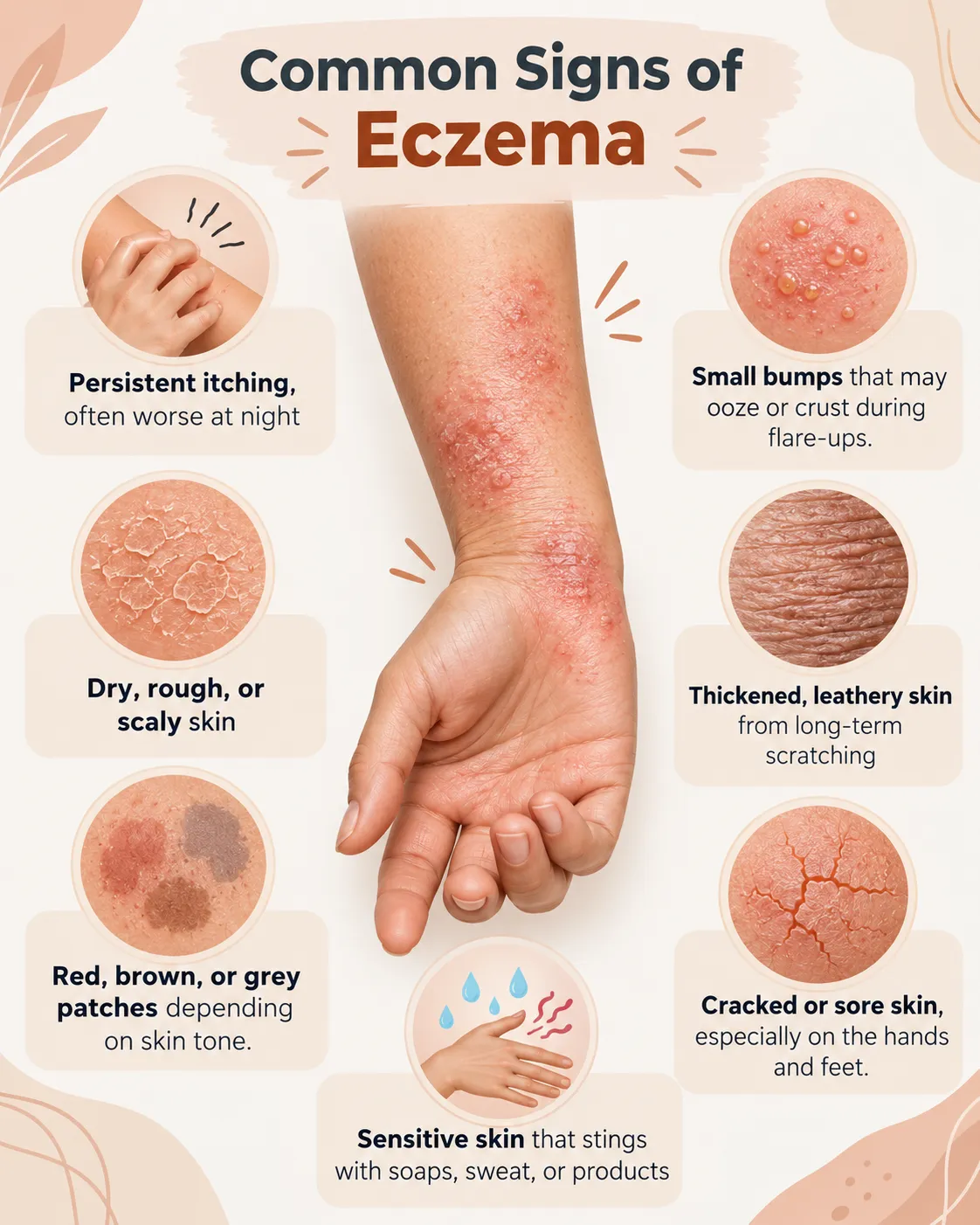
Is all eczema the same? Let’s look at the different types and how they present.
Types of Eczema Treated at The Skin Clinic
What makes eczema flare up? Let’s understand the common triggers.
Common Causes and Triggers of Eczema
Eczema usually develops from a combination of a sensitive skin barrier, genetic tendency and environmental triggers. Flare-ups may be triggered by:
Dry skin and low moisture levels
Harsh soaps, body washes, sanitisers and detergents
Sweat and humid weather, especially during the Thane monsoon
Dust, pollen, pet dander and dust mites
Fragrances, cosmetics and certain skincare products
Metal jewellery such as nickel
Certain fabrics like wool and rough synthetics
Stress and poor sleep
Hormonal changes
Frequent hand washing or long exposure to water and chemicals
Food triggers in some individuals, which need proper assessment before any dietary restriction
Identifying personal triggers is a key part of long-term eczema control.
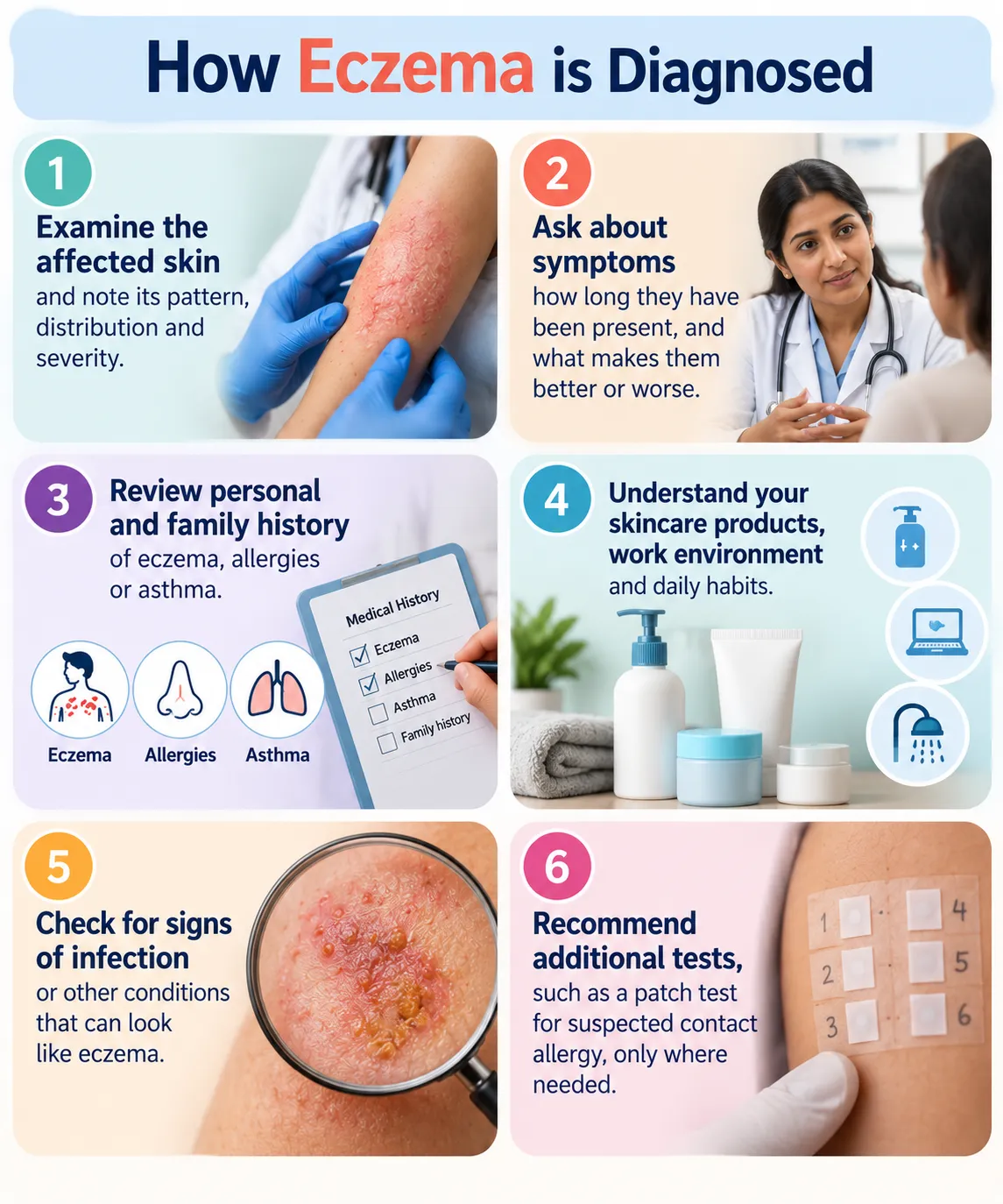
How is eczema diagnosed? Let’s understand what to expect at your consultation.
How Dr. Vandita Hede Diagnoses Eczema?
Eczema is usually diagnosed through a detailed clinical evaluation. During your consultation, Dr. Vandita Hede may:
This helps ensure the right diagnosis and avoids unnecessary or ineffective treatments.
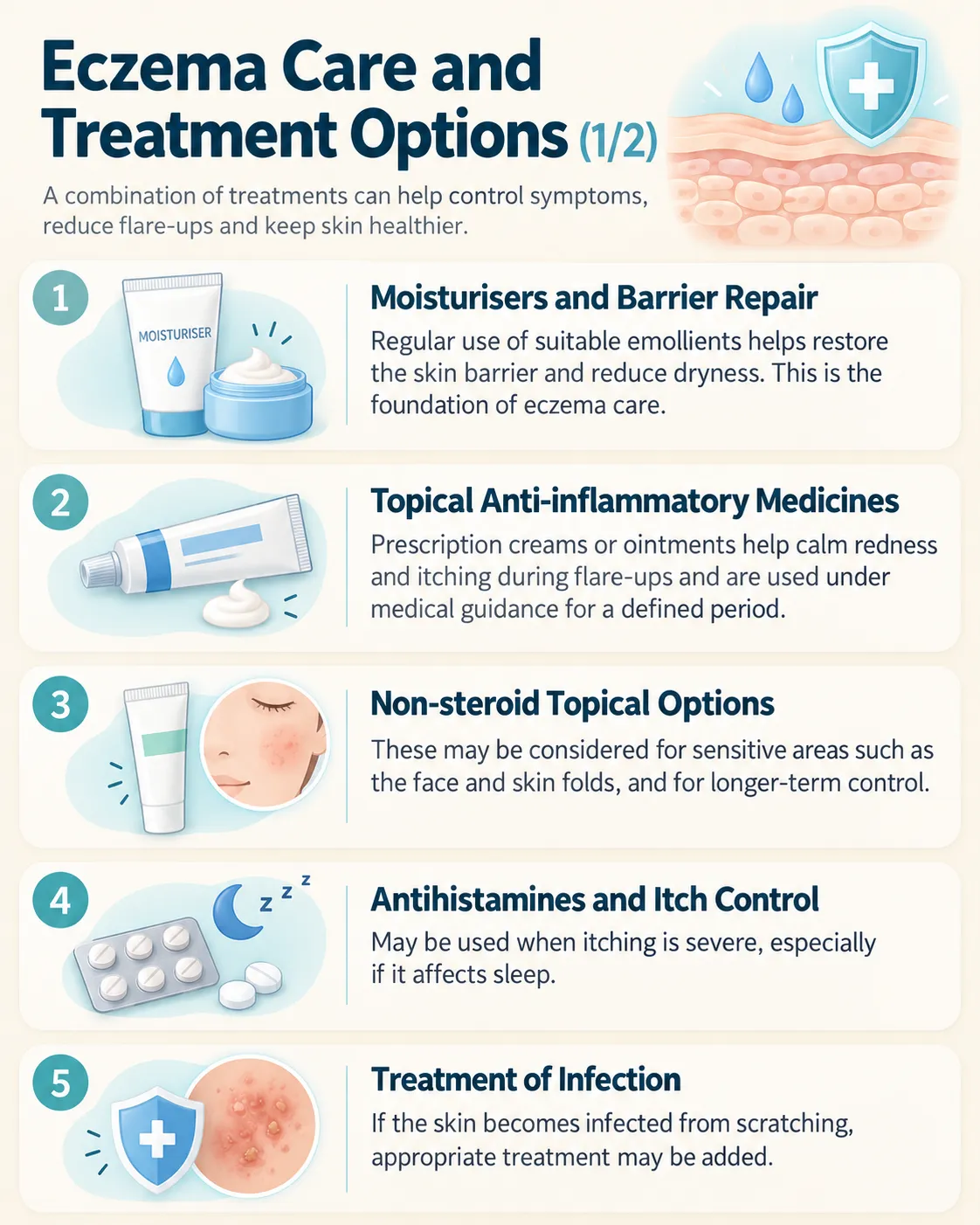
What does eczema treatment involve? Let’s explore the approaches used to control flare-ups.
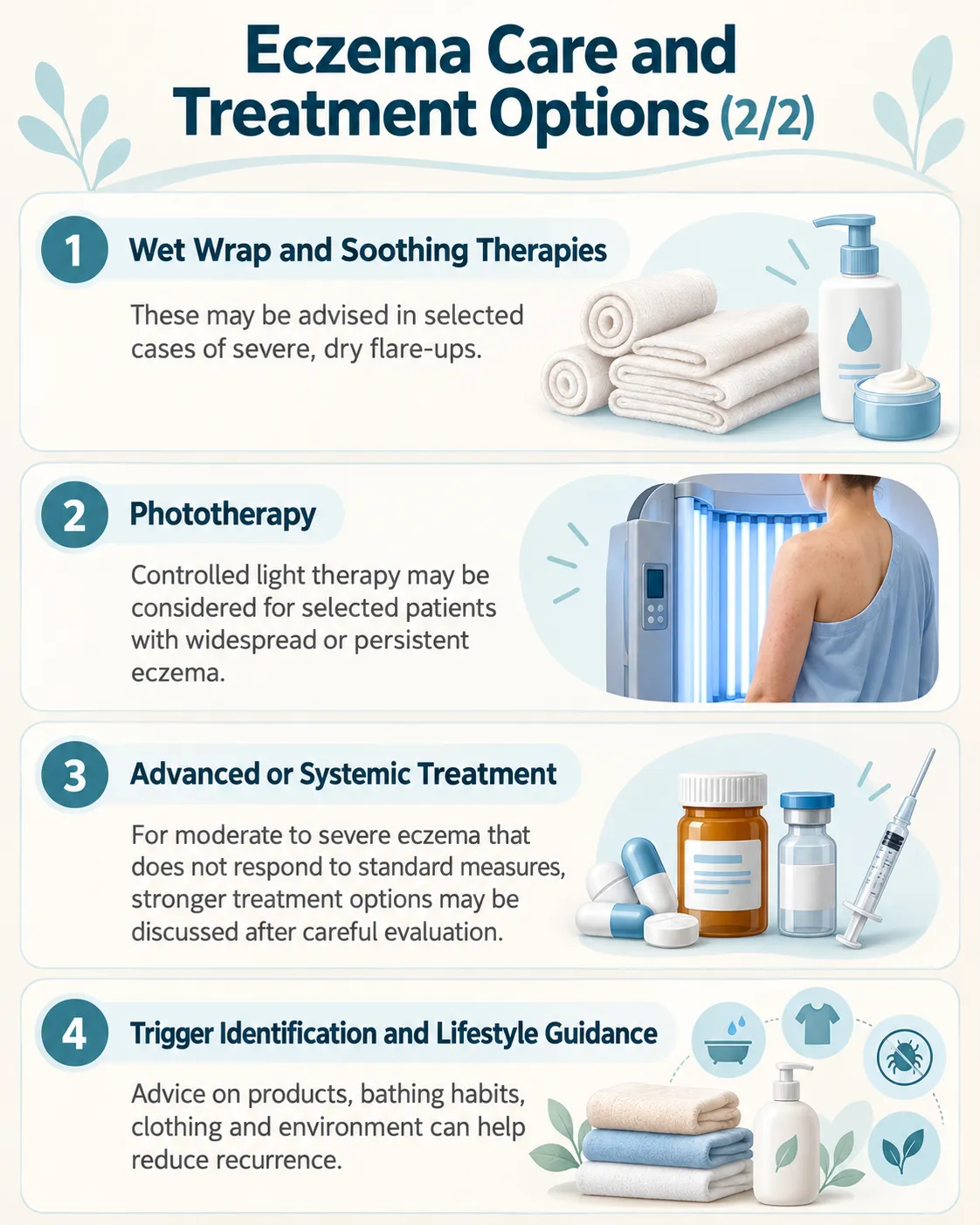
Eczema Treatment Options in Hiranandani Estate, Thane
The treatment is tailored to the individual according to the particular eczema site severity and age. The treatment may consist of any combination of this:
It helps to get treatment prescribed and monitored by a dermatologist, as using steroid creams without supervision can cause the skin condition to deteriorate.
Is it eczema or something else? Let’s compare it with similar skin conditions.
Eczema vs Other Similar Skin Conditions
Using the wrong cream, particularly steroid-containing creams for fungal infections, can make the problem worse. This is why proper diagnosis matters.
Can eczema be managed in the long run? Let’s understand what to expect from treatment.
Eczema Treatment Results & Long-Term Outlook
Eczema is a chronic condition that can be managed well but might not cure absolutely. Yet, most people can achieve clear skin that is visible using an effective management plan for months. They also might experience flare-ups that are infrequent and mild.
Signs and symptoms of soreness and itching may improve in days to weeks of starting therapy.
No dryness and skin texture is improving as long as frequent moisturising.
Weather change, stress, or infection may bring on the occasional flare ups.
Register at regular periods so that the treatment can be controlled and adapted if necessary.
Eczema improves/settles when children grow older and some adult eczema needs ‘maintenance’ treatment.
Results and the time to improvement differ for each patient.
Do you need to see a dermatologist? Let’s understand when professional care becomes important.
When Should You See a Dermatologist for Eczema?
Consider consulting a dermatologist if:
Itching disrupts your sleep or daily routine.
The skin is painful swollen crusting or oozing. This may suggest that the child has become infected.
The rashes constantly reappear
Your child has persistent dry, itchy areas
You do not know what caused the rash.
You have been regularly applying steroid creams unconcerned for a long time.
Looking for a trusted dermatologist for eczema? Let’s explore what sets The Skin Clinic apart.
Why Choose Dr. Vandita Hede for Skin Boosters Treatment?
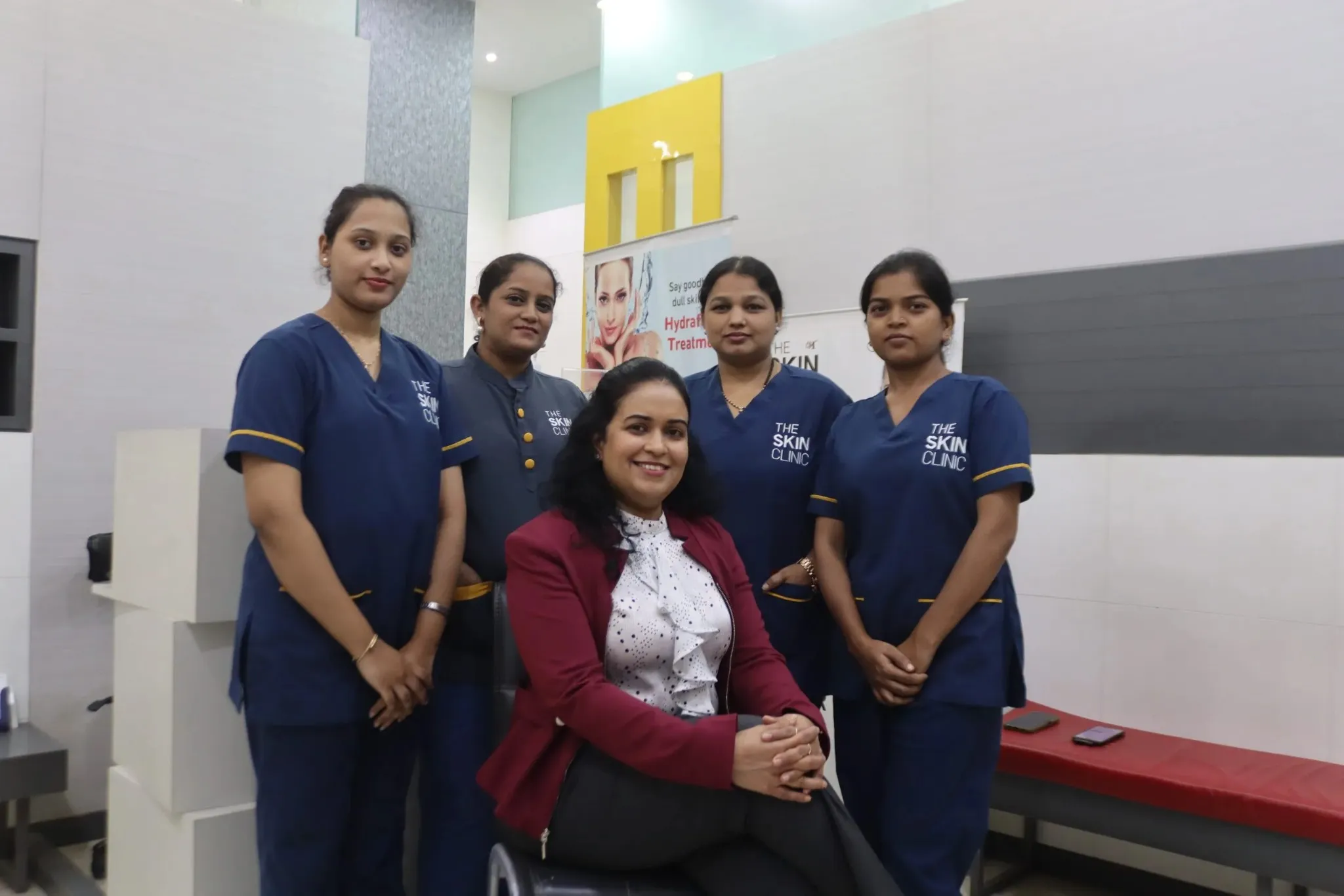
Experienced Dermatology Expertise
Vandita Hede is an esteemed dermatologist in Thane specialising in medical and aesthetic dermatology treatments.
Accurate Diagnosis
Confirm the diagnosis to species level of the type of eczema, using appropriate investigative tests/es. A. 2. Differentials.
Personalised treatment planning
Treatment can be modified for, or tailored to, any age, skin type, severity of the problem and lifestyle.
Root-Cause Approach
focus on finding triggers and fixing barriers, instead of temporary itching.
All family care
managing eczema in children, adults, and older patients.
Complete Skin Care
the power to get all your skin care and dermatologist needs in one place.
Companies with expert staff
the most advanced hygienic in-clinic environment with technology and dermatologist.
Frequently Asked Questions
What is why of eczema?
Eczema is caused by a triplet of factors a compromised barrier, genetic defect and the things that irritate, sensitize, and dry the skin including irritants allergens sweat, environmental stress and winter weather.
Can eczema be cured permanently?
Eczema is usually a long-term condition. Still, it can be controlled with the right treatment and skin care, yet flare up from time to time. Most people experience times when their eczema flares up and times when they have no symptoms.
How is eczema different from psoriasis?
The (more itchy) areas of eczema are usually dryer, irritated, and itchy while psoriasis is generally thicker plaques with a clear shiny scale. A dermatologist can differentiate between the two conditions easily.
Can eczema affect children and babies?
Yes. Atopic eczema may actually commence at any age, often at or during infancy and childhood, and may be correctingly stringently managed any or all of through the march of aging.
Are steroid creams safe for eczema?
If. It is used under a doctors supervision and as a directions, in the correct area for the right amount of time then they are safe. Without a professional’s supervision they can cause side effects.
Does weather affect eczema?
Yes. They go hand in hand: dry weather can be itchy for some people, and humid weather and perspiration may trigger the same.
Does diet affect eczema?
Trigger foods are for just some people. Do not attempt to remove foods yourself but discuss food trigger issues with your dermatologist.
How can I stop scratching at night?
Keep skin well moistened, keep nails short, wear soft cotton clothing and ask your health professional about effective itch control. If you are constantly scratching at night see your doctor.
When should I worry about an eczema flare-up?
Visit your dermatologist if the rash is painful, weeping, crusted, or swollen, or if a fever develops, indications of an infection.