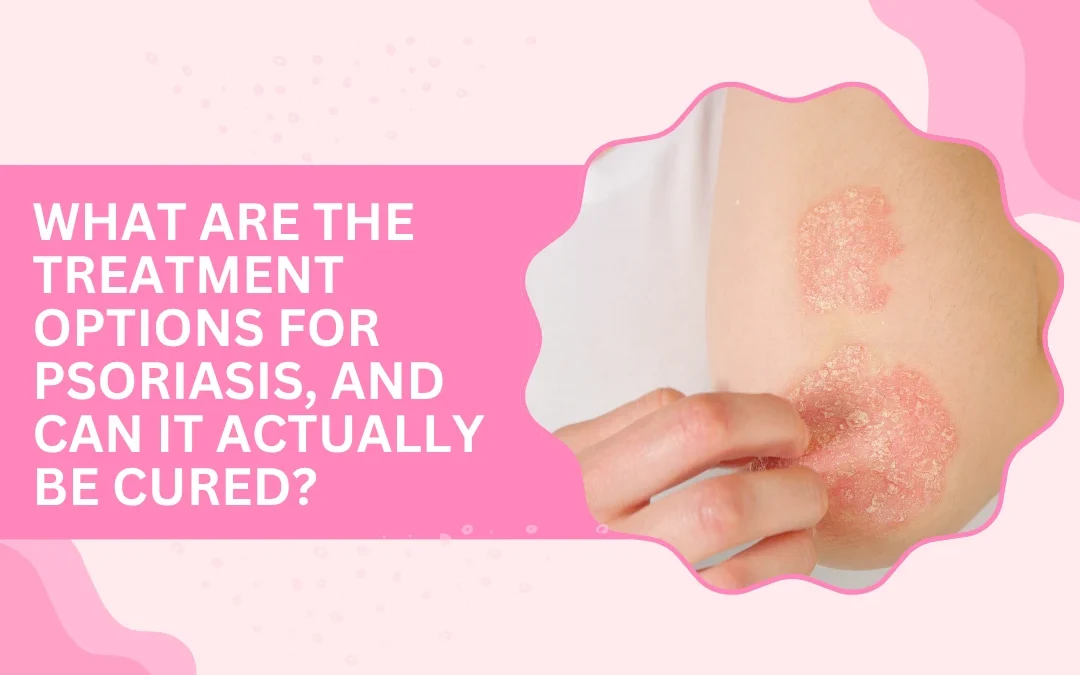
Cure isn’t really the right word for psoriasis. Control is. Most patients can get their skin clear, or close to it, and keep joint pain from turning into a daily problem, but the underlying condition stays in the background. The plan a person actually needs depends on how much skin is involved. A small patch on the elbow might respond to a cream in a few weeks. A body-wide flare needs something stronger, sometimes light therapy, sometimes a prescription drug that works from the inside out.
According to Dr. Vandita Hede, Dermatologist in Hiranandani Estate, Thane, “I tell patients this all the time. No cure doesn’t mean no options. I’ve had people walk in convinced they’d be dealing with visible flares for the rest of their lives, and six months later their skin looks nothing like that first photo we took. That’s not a small win in my book.”
What Treatment Options Exist for Psoriasis?
There’s a rough order to how dermatologists approach this. Start simple, escalate only when simple isn’t cutting it.
Creams: Topical corticosteroids, vitamin D analogues, salicylic acid ointments, these handle mild, localized patches well, and for a lot of people, that’s the whole treatment.
Light Therapy: Narrowband UVB, done in-clinic a few times a week, slows the skin cell turnover that’s driving the flare in the first place. It’s not fast. But it works for plenty of patients who’ve plateaued on creams alone.
Systemic Route: Methotrexate, cyclosporine, oral retinoids. These treat the whole body rather than a single patch, and they’re generally reserved for moderate to severe cases.
Biologics: Injectable drugs that target TNF-alpha, IL-17, or IL-23 specifically, and honestly, they’ve changed the outlook for patients whose psoriasis used to be considered stubborn or untreatable.
No two treatment plans look alike here, because no two patients’ psoriasis behaves alike. That’s the whole reasoning behind personalized care plans built case by case rather than off a template.
Can Psoriasis Actually Be Cured?
Not permanently, no. That’s the honest answer, and it surprises fewer patients than it used to.
No Permanent Cure: Psoriasis is driven by the immune system, and medicine hasn’t found a way to switch that off for good.
Remission Happens: Months of clear skin. Sometimes years. Flares can come back, but with the right plan they tend to be shorter and easier to manage than the first one ever was.
Severity Decides the Approach: A mild case might need one cream and nothing else. A severe one might need three treatments working together.
Ongoing Care: Not a one-time fix. Plans get adjusted as skin responds, and that’s the part patients find hardest to accept early on.
Skin concerns aren’t always about a rash or a flare either. If you’re weighing tattoo removal, or dealing with stubborn pigmentation like dark spots or discoloration, our Q-Switched Laser Treatment page covers how the procedure treats both safely on Indian skin.
Why Choose Dr. Vandita Hede for Psoriasis Treatment?
Dr. Vandita Hede has treated skin conditions across Thane for over sixteen years now. She trained at Goa Medical College for her MD, and she’s a member of IADVL, IMA, and CDSI. Her plans start with how severe the case actually is, not a default prescription handed to every patient who walks in. So mild cases aren’t overtreated, and severe ones aren’t left undertreated either.
Psoriasis rarely stays static, and she treats it that way. Response, side effects, flare timing, all of it feeds into adjustments down the line rather than a plan that’s written once and forgotten. Call +91 82916 99161 to book a consultation.
Wondering which treatment actually fits your skin type and severity?
Frequently Asked Questions
How long before psoriasis treatment shows results?
Creams often help within a few weeks. Phototherapy and systemic drugs usually take a couple of months to show their full effect.
Are psoriasis creams safe to use long-term?
Mostly yes, under supervision. Long-term steroid use does need monitoring, since overuse can thin the skin gradually.
Is phototherapy painful or risky?
No real pain involved, just consistency. Mild redness afterward is normal, and the dose gets adjusted to keep it that way.
Do biologic drugs work for everyone with psoriasis?
Not everyone, no. Most patients respond well, but dermatologists usually try other options first before reaching for biologics.
References
- National Institute of Arthritis and Musculoskeletal and Skin Diseases (NIAMS/NIH), Psoriasis Causes and Risk Factors: https://www.niams.nih.gov/health-topics/psoriasis
- National Library of Medicine (PMC), Biologics in the Management of Psoriasis: https://pmc.ncbi.nlm.nih.gov/articles/PMC3047928/
Disclaimer: This article is for educational purposes only and is not a substitute for professional medical advice. Please consult a qualified dermatologist to determine the treatment plan suited to your condition.