
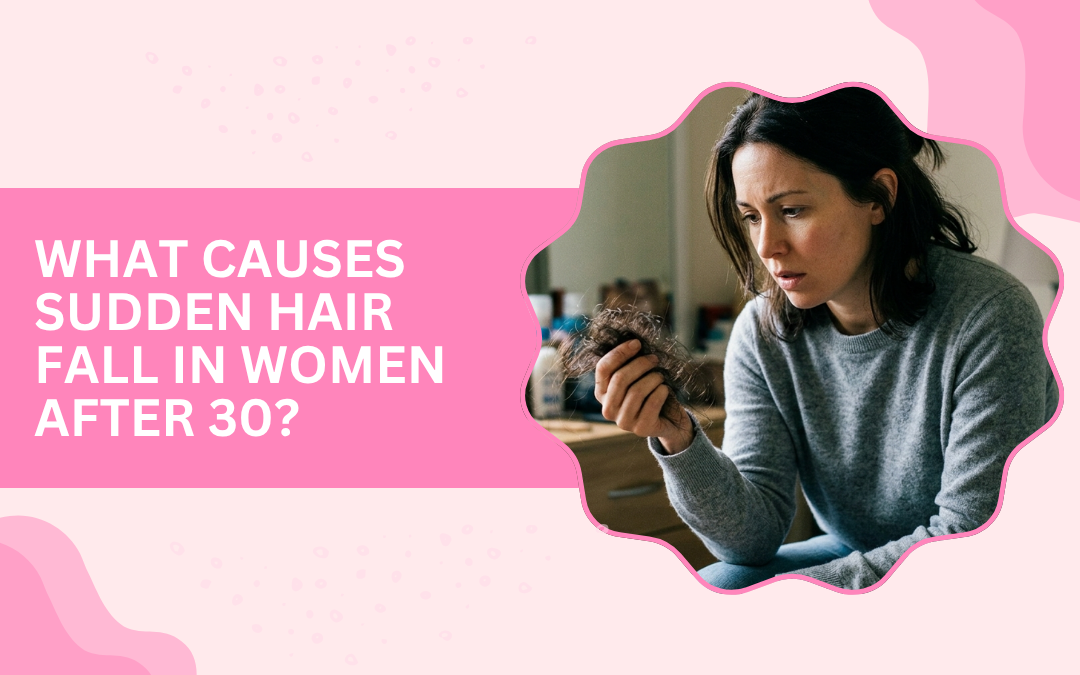
Sudden hair fall in women after 30 usually traces back to a handful of things: physical or emotional stress, hormonal shifts (pregnancy, PCOS, or thyroid trouble), nutritional gaps (low iron or vitamin D), or an inherited tendency to thin. Most sudden, all-over shedding is a condition called telogen effluvium, where some trigger pushes a big share of your hair into its resting phase at once. The reassuring part? It’s usually temporary. Fix the cause and the hair generally grows back over a few months.
According to Dr. Vandita Hede, Dermatologist in Hiranandani Estate, Thane, “Seeing hair everywhere on the pillow makes women fear the worst. But sudden shedding is often the scalp reacting to something that happened months ago, a fever, a crash diet, a stressful stretch. Find that trigger and most of it reverses.”
What Triggers Sudden Hair Fall After 30?
Most sudden shedding at this age is telogen effluvium, hair knocked into its resting phase by a trigger. Usually it’s one of these:
- Stress and shock to the body. A high fever, surgery, childbirth, a crash diet, or a genuinely rough emotional patch can all tip hair into shedding, and it often shows up two to three months after the event.
- Hormonal shifts. The post-pregnancy hormone drop, PCOS, and thyroid problems (both under and over-active) are classic culprits once you’re past 30.
- Nutritional gaps. Low iron (ferritin) and low vitamin D are the two most common, and both are easy to miss without a blood test.
- Genetics catching up. Female-pattern thinning is inherited and can start surfacing after 30, usually as a widening parting rather than sudden clumps.
Working out which one is actually driving it is the whole game, and once follicles are identified as still active, Growth Factors Concentrate therapy is one of the options that helps them recover.
When Should You Worry About Hair Fall?
Losing up to 100 hairs a day is completely normal. It’s worth getting checked when any of this shows up:
- It’s dragged on past six months. Acute shedding settles by itself. Shedding that keeps going points to something ongoing, like low iron or an unmanaged thyroid.
- Your parting is widening. Thinning concentrated on top, rather than even shedding all over, can signal female-pattern loss, which responds best to early action.
- There are bald patches. Smooth, coin-sized bare spots are a different condition (alopecia areata) and need a doctor’s eye.
- Other symptoms tag along. Fatigue, weight changes, or irregular periods alongside the shedding hint at thyroid issues or PCOS and deserve a proper workup.
If a skin concern is on your mind alongside the shedding, our guide to open pores covers another issue we treat often.
Why Choose Dr. Vandita Hede?
Dr. Vandita Hede has spent 17+ years treating skin and hair in Thane. MD from Goa Medical College, with active membership in IADVL, IMA, and CDSI. With hair fall, she starts by finding the cause, blood work, a scalp exam, your history, before recommending anything, whether that’s correcting a deficiency, GFC or PRP, or a longer-term plan for pattern loss.
At The Skin Clinic in Hiranandani Estate, hair fall is diagnosed before it’s treated, so you’re never chasing procedures you don’t actually need. Call +91 82916 99161 to book your consultation.
Get stronger, healthier hair with confidence. Schedule an appointment with Dr. Vandita Hede to learn which treatment is right for you.
Frequently Asked Questions
Is sudden hair fall after 30 permanent?
Usually not. Most sudden shedding (telogen effluvium) is temporary and regrows within three to six months once the trigger is corrected.
Can low iron or vitamin D cause hair fall?
Yes. Low iron (ferritin) and low vitamin D are common, easily missed causes of hair fall in women, and both are correctable.
Does PCOS cause hair loss in women?
Yes. PCOS raises androgen levels, which can thin scalp hair, often alongside signs like irregular periods or acne.
How much hair fall is normal?
Losing up to about 100 hairs a day is normal. Consistently more than that, or a visibly widening parting, is worth getting checked.
References
- Cleveland Clinic – Telogen Effluvium: Symptoms, Causes, Treatment & Regrowth — https://my.clevelandclinic.org/health/diseases/24486-telogen-effluvium
- National Library of Medicine (PMC) – Review of Female Patients With Telogen Effluvium — https://www.ncbi.nlm.nih.gov/pmc/articles/PMC11826290/
Disclaimer: This content is for general information only and is not a substitute for professional medical advice. Results vary between individuals. Consult a qualified dermatologist for diagnosis and treatment of hair loss.