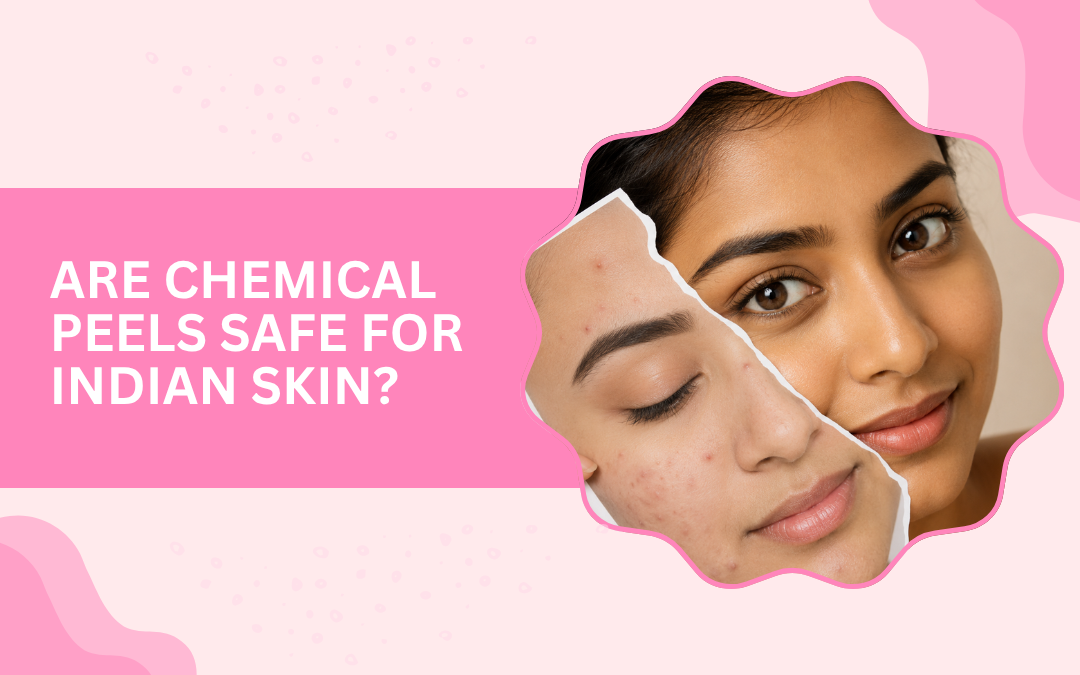
Yes, chemical peels are safe for Indian skin, but only superficial to mild medium-depth peels, done under a dermatologist. Indian skin mostly sits between Fitzpatrick types IV and VI. That means more active melanin-producing cells. Push a peel too deep or too strong, and those cells overreact. The result is post-inflammatory hyperpigmentation (PIH), the dark patches that can linger for months. The right peel, at the right strength, with proper priming. That’s what keeps it safe.
According to Dr. Vandita Hede, Dermatologist in Hiranandani Estate, Thane, “The worry with Indian skin isn’t the peel itself. It’s what the skin does afterward if it gets irritated. Prime it first, keep the depth controlled, and peels are one of the safest tools we have for pigmentation.”
Why Does Indian Skin React Differently to Peels?
Darker skin handles sun better, but it pigments and marks more easily. The same melanin that shields the skin also overreacts to any injury.
More Active Melanocytes: Type IV to VI skin has pigment cells that fire fast. A little inflammation can tip them into overdrive.
Higher PIH Risk: A peel that’s too aggressive leaves brown marks, sometimes darker than the original concern. These take months to settle.
Need for Priming: The skin is prepped for two to four weeks before a peel, usually with a lightening agent. This calms the melanocytes ahead of the procedure.
Slower, Layered Approach: Lower concentrations, more sessions. Rushing the depth is what causes trouble on Indian skin.
This is exactly why supervised chemical peels beat any at-home acid kit for darker skin tones.
Which Chemical Peels Are Safe for Indian Skin?
A handful of peels have a long, well-documented record on darker skin. These are the ones dermatologists reach for first:
- Glycolic acid, an AHA, is the workhorse here. Superficial, studied heavily on Indian patients, and dependable for dullness, mild pigmentation, and early ageing, without much PIH risk at sensible strengths.
- Salicylic acid is oil-soluble, so it actually gets down inside clogged pores. Oily, acne-prone skin tends to do well on it.
- Mandelic acid has a larger molecule that soaks in slowly. That slowness is the point, it makes mandelic one of the gentlest options going, even on very dark or reactive skin.
- Lactic acid is mild and hydrating. Useful when the skin barrier is already a little beaten up and can’t take much.
- Phytic and newer combination peels skip the neutralising step, and they’re often the choice for stubborn melasma when downtime has to stay short.
What’s missing from that list? Deep phenol peels. For most type V and VI skin, they’re simply too risky to justify, and the pigmentation gamble rarely pays off. That same careful thinking runs through other texture work too, which is why a peel often sits in the treatment mix for open pores.
Why Choose Dr. Vandita Hede for Chemical Peels?
Dr. Vandita Hede has spent 17+ years treating Indian skin in Thane. MD from Goa Medical College, with active membership in IADVL, IMA, and CDSI. Every peel starts by reading your skin type and pigment history first, then picking the gentlest agent that still works, instead of one fixed-strength peel for everyone.
At The Skin Clinic in Hiranandani Estate, peels are primed, planned around your skin tone, and spaced for safety on darker skin.
Get clearer, brighter skin with confidence. Schedule an appointment with Dr. Vandita Hede to learn which chemical peel suits your skin type.
Frequently Asked Questions
Do chemical peels darken Indian skin?
Not when done correctly. Darkening (PIH) happens only when a peel is too deep, or the skin isn’t primed and protected afterward.
Which peel is safest for Indian skin?
Superficial glycolic, mandelic, and lactic acid peels are the safest, with low pigmentation risk for Fitzpatrick IV to VI skin.
How many peel sessions are needed?
Most concerns need four to six sessions, spaced two to four weeks apart, for visible and lasting results
Is sunscreen necessary after a peel?
Yes. Daily broad-spectrum sunscreen is non-negotiable after a peel, or pigmentation can return quickly on Indian skin.
References
- Sarkar R, Bansal S, Garg VK – Chemical Peels for Melasma in Dark-Skinned Patients (J Cutan Aesthet Surg, 2012) — https://pmc.ncbi.nlm.nih.gov/articles/PMC3560164/
- DermNet – Chemical Peels (Face Peels) — https://dermnetnz.org/topics/chemical-peels